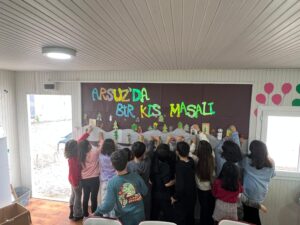
Our grantee partner, the Local Development Association (Yerelden Kalkınma Derneği – YERKAD), works to improve quality of life and build a more inclusive future by addressing local and regional challenges in Şanlıurfa. Their holistic approach supports economic, social, cultural, and environmental sustainability, with a particular focus on children who face the greatest barriers to education.
YERKAD promotes equal access to education by delivering an accelerated curriculum to 60 eighth-grade children in Şanlıurfa who miss out on school due to seasonal agricultural work. We support this work through the Children’s Fund, in collaboration with the Support Foundation for Civil Society and the Red Kite Giving Circle.
Read our interview with YERKAD to learn more about their activities, the challenges faced by seasonal worker children in Şanlıurfa, and the potential of the model they are developing.
Please also watch our video with YERKAD to see how your support changes lives.
Can you tell us about the purpose of your organisation and the work you carry out?
We founded YERKAD in 2019 in Şanlıurfa to address inequalities in regional development. Although the city is culturally rich, it faces serious social and economic challenges. We wanted to create solutions and opportunities, especially for disadvantaged groups.
Our founders bring experience from the public sector, private sector, and civil society, which gives us a broad perspective. From the start, we believed that “development must begin locally.” Based on this, we design projects for children of seasonal agricultural workers, NEET youth, women entrepreneurs, and refugees.
So far, we’ve worked on more than 120 projects with partners from over 30 countries and many national institutions. For example, with EU support we set up entrepreneurship centres in Şanlıurfa, training young people in skills such as mobile phone repair and web design. With support from the Swedish Embassy, we carried out projects encouraging young people’s democratic participation.
But one of the projects closest to our hearts is the New Education Model for Seasonal Agricultural Worker Students, which we are implementing with your support. At YERKAD, we don’t just identify problems — we aim to be part of the solution by creating sustainable impact through collaboration.
There are about 720,000 child labourers in Türkiye, many of them in Şanlıurfa.
Considering Şanlıurfa’s demographic and social structure, what are the main challenges for children, and what solutions are needed?
Şanlıurfa has one of Türkiye’s youngest populations, with children making up a huge proportion. While this is a potential strength, gaps in social policy turn it into a serious challenge.
One of the biggest problems is access to education and school attendance. Children from rural areas, especially those from seasonal agricultural worker families, spend several months a year working in the fields. This prevents them from attending school regularly and following the curriculum, which lowers academic achievement and erodes self-confidence. Many children eventually drop out of school altogether.
Another pressing issue is child labour. According to 2019 data from the Turkish Statistical Institute, there are about 720,000 child labourers in Türkiye, many of them in agricultural regions like Şanlıurfa. Poverty pushes families to send their children to work in the fields or on the streets.
Language and cultural barriers are also a challenge, particularly for Syrian children. Adjusting to the language of instruction and integrating into the social environment takes time, which often leads to exclusion, discrimination, and dropping out of school.
To solve these problems, a holistic approach is needed:
- Flexible education models, such as our accelerated curriculum, to keep children in school.
- Awareness-raising with families about the value of education and risks of child labour.
- Social workers in schools to identify children’s needs early.
- Stronger cooperation between civil society, local authorities, and government institutions.
Şanlıurfa’s young population is a great potential — but to unlock it, we need policies centred on education, social inclusion, and psychosocial support.
Seasonal agricultural worker children face challenges in education, inclusion, and basic rights.
What specific problems do seasonal agricultural worker children face in Şanlıurfa, and what responsibilities do different actors have?
These children face complex and chronic problems in three main areas: education, social exclusion, and access to basic rights.
First, education is disrupted. Every year, families migrate to other provinces between March and April and stay away for 3-5 months. Long absences cause children to fall behind, perform poorly, and eventually disconnect from school; undermining an entire generation’s right to education.
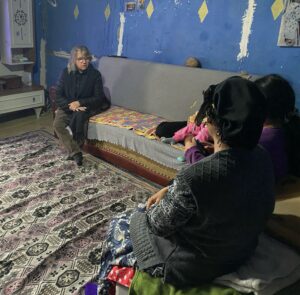
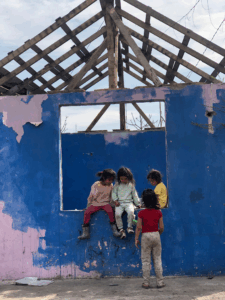
Second, frequent migration and poor living conditions expose these children to social exclusion. They often live in inadequate housing, miss out on social activities, and lack safe spaces to simply be children. This affects their psychosocial development and self-esteem.
Third, many struggle to access basic rights such as healthcare and social protection, due to issues like lack of registration, transport difficulties, or limited awareness.
Solutions must involve multiple actors. Public institutions should secure the right to education through flexible, compensatory models like accelerated curricula or remote learning. Local authorities can improve living conditions, create child-friendly spaces, and offer services like mobile libraries. Civil society can make needs visible and pilot innovative solutions.
With the New Education Model for Seasonal Agricultural Worker Students, supported by the Support Foundation for Civil Society and Türkiye Mozaik Foundation, we are working with 60 children in Şanlıurfa, providing accelerated curricula, high school entrance exam preparation, cultural activities, and teacher training. We believe this model can inspire change locally and nationally. This is more than an education project — it’s about justice and the right to a future.
Ultimately, the problems faced by seasonal agricultural workers’ children are not just theirs — they are issues of social equality and justice. Every institution must take responsibility and contribute to the solution.
This is more than an education project — it’s about justice and the right to a future.
With our grant support, you are implementing the New Education Model for Seasonal Agricultural Worker Students. What activities are included and what impact do you aim for?
This support is enabling not just a project, but a real transformation in the lives of dozens of children. The project focuses on 60 students at Onikiler Secondary School in Şanlıurfa’s Eyyübiye district, who regularly fall behind because of seasonal migration.
Our work is structured around four main components:
- Accelerated Curriculum: From October to April, students attend special classes where missed subjects are covered, ensuring continuity and reducing learning losses.
- High School Entrance Exam Preparation: Each student receives exam preparation books and tests, boosting both academic performance and self-confidence. In our pilot project, with this support, three students entered science high schools and nine entered Anatolian high schools.
- Social and Cultural Activities: Outdoor reading, cinema trips, and visits to Göbeklitepe and the Archaeology Museum broaden horizons and strengthen ties to school.
- Teacher Training: Teachers receive training in modern education approaches, enabling them to better support students.
We expect measurable gains in academic success and school engagement, while building teachers’ capacity ensures sustainability. Our long-term goal is to create a model that can be scaled across Türkiye for all seasonal worker children. This project is more than an education programme — it is about justice and the right to a future.
Sometimes, one person’s belief can change a child’s life.
Finally, how would you describe YERKAD to potential supporters?
I’d like to answer with my personal story. I was born in a village in Şanlıurfa, one of ten siblings. Due to financial hardship, I left school in fourth grade and worked for three years as a seasonal agricultural worker, picking cotton and onions under the scorching sun. At the time, education seemed impossible.
One day, a young man preparing for university convinced my family to let me return to school. That was the turning point. My teachers supported me, and I eventually left the fields to build a new life. Today, I can give my own children better opportunities and also support hundreds of disadvantaged people.
If I hadn’t returned to school, I’d probably still be a seasonal worker or running a small shop. There’s nothing wrong with that, but I know that education gave me the chance to contribute more to society.
That is the purpose of YERKAD: to tell children like me, “you also have a path to succeed.” Everyone who supports us is not just contributing to a project — they are joining a real transformation.
Because we believe that seasonal agricultural work is not destiny. Sometimes, a child’s life can change with just one person’s belief in them.