Füsun Sayek Health and Education Development Association has been running health, education, and cultural activities for children, women, and young people in Arsuz, Hatay since 2013. With our previous support, the association launched the Weaving Lives project, bringing together women through a weaving workshop that generates income and preserves regional silk traditions.
The new project, supported by our Regional Recovery Support Programme III, is expanding activities at the Arsuz Life Centre — reaching 400 children through creative workshops, 50 women through empowerment sessions, and extending the Children’s Choir into nearby villages.
In this interview, the association shares how the Life Centre has become a space for healing, creativity, and solidarity in the aftermath of the 2023 earthquakes.
Can you tell us about the founding of Füsun Sayek Association for the Development of Health and Education and your work in health, education, and culture in Arsuz?
Füsun Sayek Association was founded in Arsuz in 2013 to keep alive the memory, values, and commitment to community service of Dr Füsun Sayek. Our core mission has been to carry out sustainable work in health, education, and culture for the public good — providing scholarships for local medical students and creating inclusive, accessible opportunities at a local level.
We run a wide range of activities for children, young people, women, and people of all ages in Arsuz. These include health talks and awareness workshops, children’s workshops, science, arts, and cultural events, scholarship programmes, and production workshops for women — all held as part of the Füsun Sayek Health and Culture Events, which we are holding for the 20th time this year.
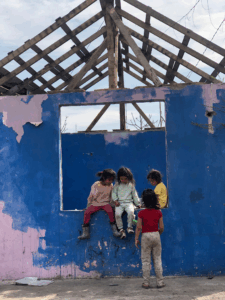
Following the 2023 earthquakes, Arsuz received a large influx of people from surrounding towns and districts, and grew rapidly. This brought new needs in terms of social cohesion, cultural life, and solidarity, and we reshaped and expanded our work accordingly.
The Iskender Sayek Culture House — a registered heritage building that had hosted our events since 2007 — was severely damaged and rendered unusable by the earthquake. While restoration work continues, we established the Arsuz Life Centre to keep our activities running without interruption.
This is not merely an event space — it is an inclusive living environment where children can learn safely, women can participate in production and social life, young people can express themselves, and the local community can come together.
The association continues to serve as a local meeting point that brings together health, education, culture, and solidarity in Arsuz.
How are opportunities for social and cultural participation for children, women, and young people in and around Arsuz? Why is there a growing need for safe, inclusive spaces — particularly in the post-earthquake context?
Opportunities for social and cultural participation remain limited in Arsuz, both in the town centre and in rural neighbourhoods. Access to art, music, creative activities, and collective learning is not always possible — particularly for children outside the town centre, for whom reaching such opportunities can be even harder.
Women, too, need spaces where they can step beyond household responsibilities, develop new skills, and build social solidarity. Such spaces matter not only for individual growth but for strengthening community bonds.
The earthquake made these needs far more visible. Physical destruction aside, daily routines, the sense of security, social relationships, and community feeling were all deeply affected.
Safe, accessible, and inclusive spaces are therefore vital for supporting children’s psychosocial wellbeing, contributing to women’s empowerment, strengthening young people’s sense of belonging, and enabling communities to heal together.
Situated beside a river in the shade of eucalyptus trees, the Arsuz Life Centre has grown organically over time — with its open courtyard, large hall, well-stocked library, youth space, and music studio — into a lively gathering point that people have made their own. Today it is not only a place for our own activities, but a shared space where different civil society organisations (CSOs), local initiatives, and communities can come together and create.
Can you tell us about the “Arsuz Life Centre Phase II: Culture, Education and Solidarity” project, supported by our Regional Recovery Support Programme III?
Our core aim is to ensure that children, women, young people, and local residents can come together in a safe, accessible, and inclusive environment in the post-earthquake period — and to build a strong centre structure through which our association can operate regularly and sustainably.
Children’s workshops aim to support creativity, open up space for learning through art, science, music, and play, and contribute to social-emotional development. Women’s empowerment workshops aim to increase women’s participation in social life, develop their productive skills, strengthen solidarity networks, and support their potential contribution to the local economy. The Arsuz Weaving Workshop, operating within the Life Centre premises, is one concrete example of this approach.
Our goal for the Centre’s third year is for it to be not just a venue for events, but a sustainable hub that takes shape around local needs, grows solidarity, and strengthens the participation of different groups.
The project also plans to expand the Arsuz Children’s Choir, deliver trainer-of-trainers sessions for local music teachers, and produce a Local Solidarity Report. How do you see these contributing to local capacity and extending the Centre’s reach?
The Arsuz Children’s Choir has been running since the second year of the Füsun Sayek Health and Culture Events — led by educators from the Ankara State Conservatoire at Hacettepe University — and offers children far more than music training: it builds collective creativity, discipline, self-confidence, belonging, and experience of performing on stage.
This year, we are launching the first phase of our “Choir in the Village” project, which aims to bring children from Arsuz’s rural neighbourhoods — who have more limited access to the arts — into the choir. Teacher training sessions in local schools will enable teachers to establish and sustain their own children’s choirs, creating lasting capacity that spreads beyond any single event.
The impact will not remain confined to a single season — by building the capacity of local teachers, it will spread permanently to surrounding neighbourhoods and schools.
One of our goals for the Arsuz Life Centre was to make it not only a place where our association operates, but a local solidarity hub owned and used by different CSOs. We are delighted to see that this is gradually becoming a reality.
The Local Solidarity Report — begun after our Arsuz CSO Solidarity Meeting in January — will serve as a tool to make local needs, available resources, partnership potential, and lessons learnt visible. We hope it will guide our future work and serve as a shared reference point for collaboration with local government, schools, CSOs, and supporters. We are also planning a second gathering this summer, focused on how to preserve and pass on Arsuz’s cultural heritage, and a broader Hatay civil society meeting in the autumn.
How would you describe Füsun Sayek Association and its impact to those wishing to support you?
For us, the association means creating a space in Arsuz where people can come together, draw strength from one another, learn, create, and heal — together. We work by listening to needs on the ground, thinking alongside local actors, and keeping long-term impact in view.
We see this most vividly at the Arsuz Life Centre. On any given day, a children’s workshop might be taking place in the hall, a book club meeting in the library, a cookery course in the kitchen, and a music session in the youth space. A child discovers a creative outlet; a young person finds a new passion through music or art; a woman joins the weaving workshop and, in doing so, becomes part of a strong solidarity network.
Our scholarship fund — supporting 125 higher education students from the earthquake-affected region — is also dear to us. One of the most moving pieces of news this year was that one of our scholarship graduates opened their own pharmacy in Hüyük, a rural village near Arsuz.
Such examples remind us, again and again, how the support given to a student can find real, tangible expression in their own life — and in the place they call home.
The Arsuz Weaving Workshop is another embodiment of our approach. What began as learning and spending time together has grown into a space of solidarity where women support one another, gain confidence, produce, and begin contributing to the local economy — most recently through the formation of production cooperatives and the start of sales.
To anyone wishing to support us: every contribution to Füsun Sayek Association helps keep another door open in Arsuz — for a child to encounter a creative space, for a woman to join in the act of making, for a young person to find a safe place to express themselves, and for a student to continue their education. We believe these contributions are an investment not only in today’s needs, but in the future of Arsuz and the wider region.