El Ele Education and Culture Association (El Ele Eğitim ve Kültür Derneği) works in Esenyurt, Istanbul, to support disadvantaged individuals through education and social programmes. The association focuses on improving psychosocial well-being and helping children, women, and families better integrate into social life.
With grant support from the Digital Transformation Fund, launched in partnership with the Support Foundation for Civil Society and European Bank for Reconstruction and Development (EBRD), El Ele Association received capacity-building support in 2025. As part of this support, the association is developing “My Digital Future”, an online learning platform that offers children and young people training in digital skills and artificial intelligence.
Below, El Ele Association shares why digital education matters for the communities they work with, how the programme was designed, and how it aims to reduce inequalities in access to technology.
Can you tell us about El Ele Education and Culture Association and your main areas of work?
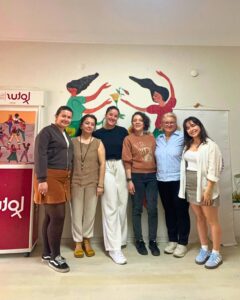
El Ele Education and Culture Association has been working in Esenyurt since February 2019. Our name reflects our belief in moving forward hand in hand, through solidarity and shared effort.
We mainly support families who have migrated to Istanbul and who face economic hardship. Our focus is on children, women, and individuals who need educational and psychosocial support. Our aim is to improve their wellbeing, support social inclusion, and help them build better lives.
Education is at the centre of our work. With the support of volunteer teachers and education professionals, we provide free academic support to children of different age groups. We also offer literacy courses for women who cannot read or write and help them prepare for primary and secondary school equivalency exams.
In addition, we provide mental health support through group sessions and workshops led by psychologists and guidance counsellors. We organise cultural and educational activities that support children’s social and emotional development.
We also run a social enterprise called OPINIO, through which we design and produce OPI STEAM Kits. These kits aim to make science and technology education more accessible. Through OPINIO, we also carry out social awareness projects with corporate partners.
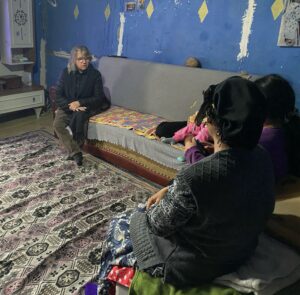
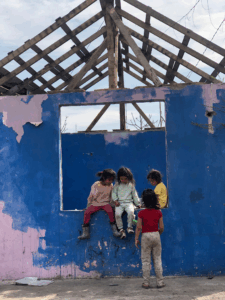
After the earthquakes, we worked in Hatay Umutkent with field staff and container units, offering psychosocial support for children, young people, and women affected by trauma.
My Digital Future programme sees digital literacy as a basic need and aims to prevent the digital divide from growing even wider for disadvantaged groups.
Why did you decide to offer digital skills and AI training for children and young people? How did you design the content?
We developed My Digital Future to help children and young people prepare for a fast-changing digital world. For disadvantaged groups, access to digital skills plays a key role in creating equal opportunities in education and future employment.
Many of the children we work with have limited access to technology. Without support, the digital gap between them and their peers continues to grow. Our programme aims to prevent this gap from widening and to help children become confident and capable technology users.
The training is designed for primary, secondary, and high school students. It covers basic digital skills and introduces artificial intelligence through interactive and age-appropriate content.
The programme was shaped through needs assessments, curriculum research, expert input, and pilot sessions with students. At the end of each module, children create their own small projects, helping them see what they can achieve with their new skills.
The programme delivers AI and digital skills through an online learning platform designed for children and young people.
What do you aim to achieve with the support of the Digital Transformation Fund?
Our main goal is to expand My Digital Future so that it can reach more children and young people.
The project focuses on three key areas:
- Improving the software infrastructure of the online learning platform
- Developing new training modules on digital skills and AI
- Training civil society organisations on how to use and deliver digital content, and supporting wider outreach
You plan to work with five civil society organisations as part of the programme. How does this model work, and how will you ensure sustainability?
My Digital Future will be delivered through an online learning management system developed by El Ele. The platform will host our own training content and also allow five partner organisations working with children and young people to add their own modules.
By bringing these organisations onto the platform, we aim to strengthen their capacity and support knowledge-sharing. Each partner will be able to develop content based on its own area of expertise.
We are looking to work with organisations active in education and culture for children and young people. Partners are expected to upload content, take part in training sessions, and support outreach activities.
This model allows us to reach more children, enrich the learning content, and support long-term sustainability. Training on digital income models will help the platform continue beyond the grant period.
By allowing multiple children to share one device and by offering free content, the programme helps reduce economic barriers.
What challenges do migrant families in Esenyurt face when it comes to digital education?
Many families in Esenyurt face serious economic challenges. They often have several children and limited access to digital devices. Internet access is costly, and even when a device is available, it is usually shared by many children.
Both children and parents often lack basic digital skills. Many adults are not literate, and families are dealing with stress related to migration and adapting to new living conditions.
My Digital Future aims to respond to these challenges. Through the online platform, children can access high-quality digital education even with limited resources. More than one child can learn using the same device and progress at their own pace.
Free training modules help reduce financial barriers. Working with partner organisations also allows us to offer local support around device access, internet connectivity, language needs, and psychosocial support.
To touch the lives of many more children like Elif and help them realise their potential, we need support.
How would you describe your impact to those who want to support your work?
Elif is an 11-year-old girl who moved to Esenyurt with her family. At home, there was no computer or internet. This made it difficult for her to keep up with technology classes at school, and she often felt left out.
Her mother came across El Ele’s activities, and Elif joined our technology courses. She learned basic skills such as creating an email account, using Google and Web 2.0 tools, and later began learning coding, internet safety and AI concepts through the My Digital Future platform.
In a short time, she used AI tools to create a simple animation. Seeing her own work helped her gain confidence. Her school performance improved, and she began to believe in her abilities.
Elif’s story shows that the education provided through El Ele and the My Digital Future platform is not just about skills. It offers hope, opportunity, and real change.
To reach many more children like Elif and help them build their digital future, we need support. Together, we can reduce the digital divide, promote equal access to education, and help shape the talents of tomorrow — starting today.